
2025 ADC Industry Insights: Three Key Trends
With the 2026 AACR Annual Meeting now concluded, several key trends in the ADC landscape have become increasingly clear, as a growing number of newly disclosed ADC assets highlighted the evolving direction of next-generation ADC development.
AACR 2026 reinforced that ADCs remain one of the most active and rapidly evolving modalities in oncology. Below, we summarize several key ADC trends emerging from AACR 2026.

A total of 373 ADC-relevant abstracts were identified at AACR 2026, of which 11% were clinical and 89% preclinical. The fastest growth in abstract volume was observed for degrader-antibody conjugates (+267%), alongside marked increases in dual-payload ADCs (+147%), fragment-ADCs (+133%), and bispecific ADCs (+116%) (Fig.1).
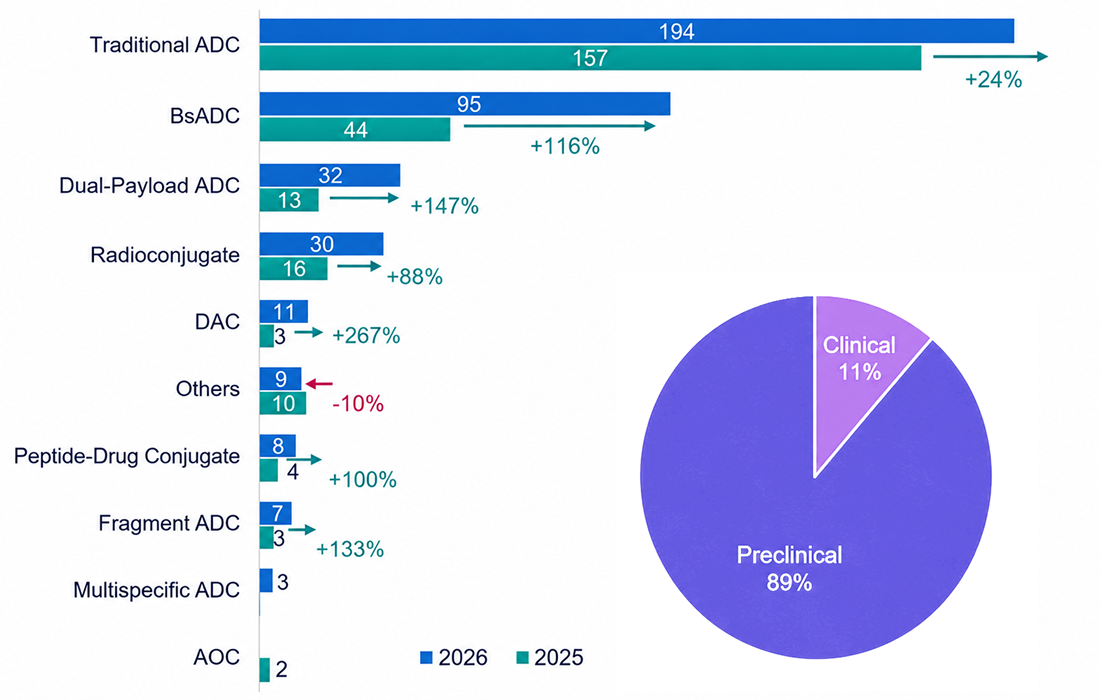
Fig. 1 Number of Abstracts by Therapeutic Class
Notably, 119 new drugs were disclosed at AACR 2026. Traditional ADCs (41%) and bispecific ADCs (40%) comprised the majority of new entries, with dual-payload ADCs (11%) ranking third, further highlighting continued innovation momentum across these rapidly evolving ADC modalities.

A total of 75 distinct targets from single-targeting ADCs and 61 distinct target pairs from dual-targeting ADCs were identified at AACR 2026. However, compared with the target analysis reported in the highlights at AACR 2025, a slight decrease was observed in the number of distinct single targets across both existing and new drugs. This trend suggests a consolidation in the ADC landscape toward well-validated targets.
At the same time, increasing exploration of next-generation payloads, immune-enabled designs, and complex ADC constructs highlights a broader shift toward platform- and engineering-driven innovation rather than target discovery alone. This trend is consistent with a derisked development approach in response to the increasingly saturated traditional ADC landscape and the broader macroenvironmental preference for highly differentiated therapeutics.

Another highlight at AACR 2026 was the growing emphasis on target combinations. Among the newly disclosed drugs, 31 distinct target pairs were investigated, as shown in the Fig. 2. PD-L1 and B7-H3 emerged as the two most frequently studied single targets in new bsADCs presented at the meeting.
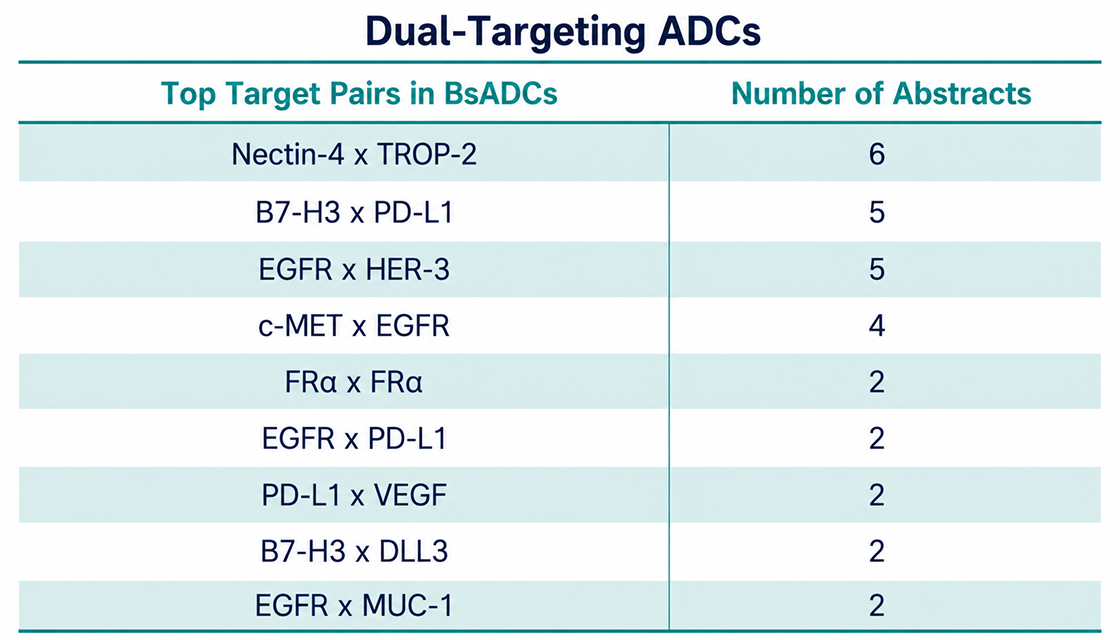
Fig. 2 ADC Abstracts by Top Targets
Notably, the prominence of PD-L1 suggests a shift in design emphasis from purely tumor-intrinsic signaling synergy and resistance bypass toward immune-modulatory and tumor-localized strategies, further underscoring growing industry interest in immune-enabled bsADC designs.

At AACR 2026, a broad range of new payload classes were publicly presented for the first time, including pan-RAS inhibitors, cell-cycle checkpoint (CHK) inhibitors, STING agonists, and protein degraders.
These emerging payload classes also reflect a broader shift in ADC payload innovation — from purely cytotoxic mechanisms toward design strategies that place greater emphasis on biology-driven synergy and resistance-directed development.
All data sourced from the Beacon database.
At ChemExpress, we offer integrated capabilities across ADC development: